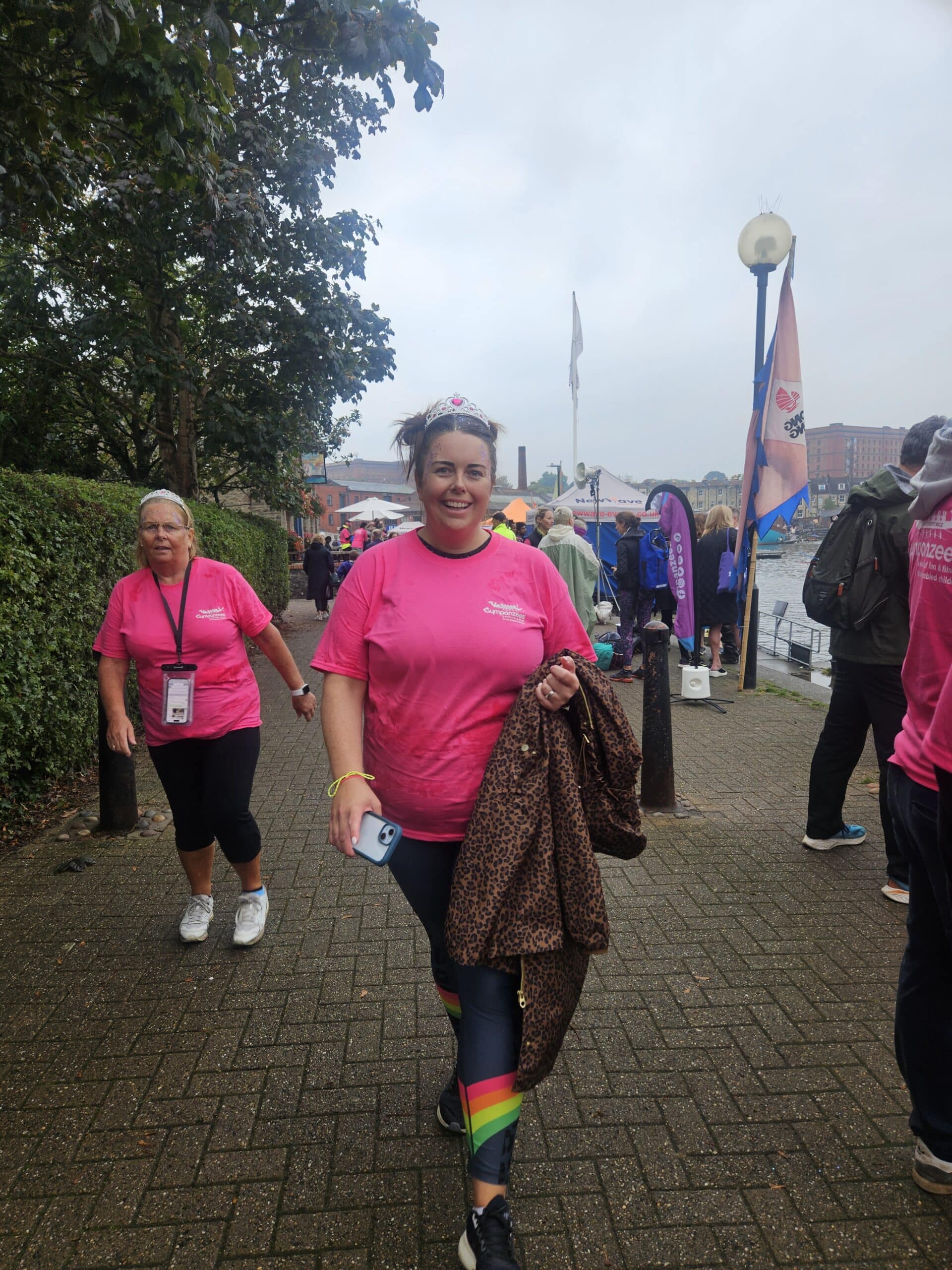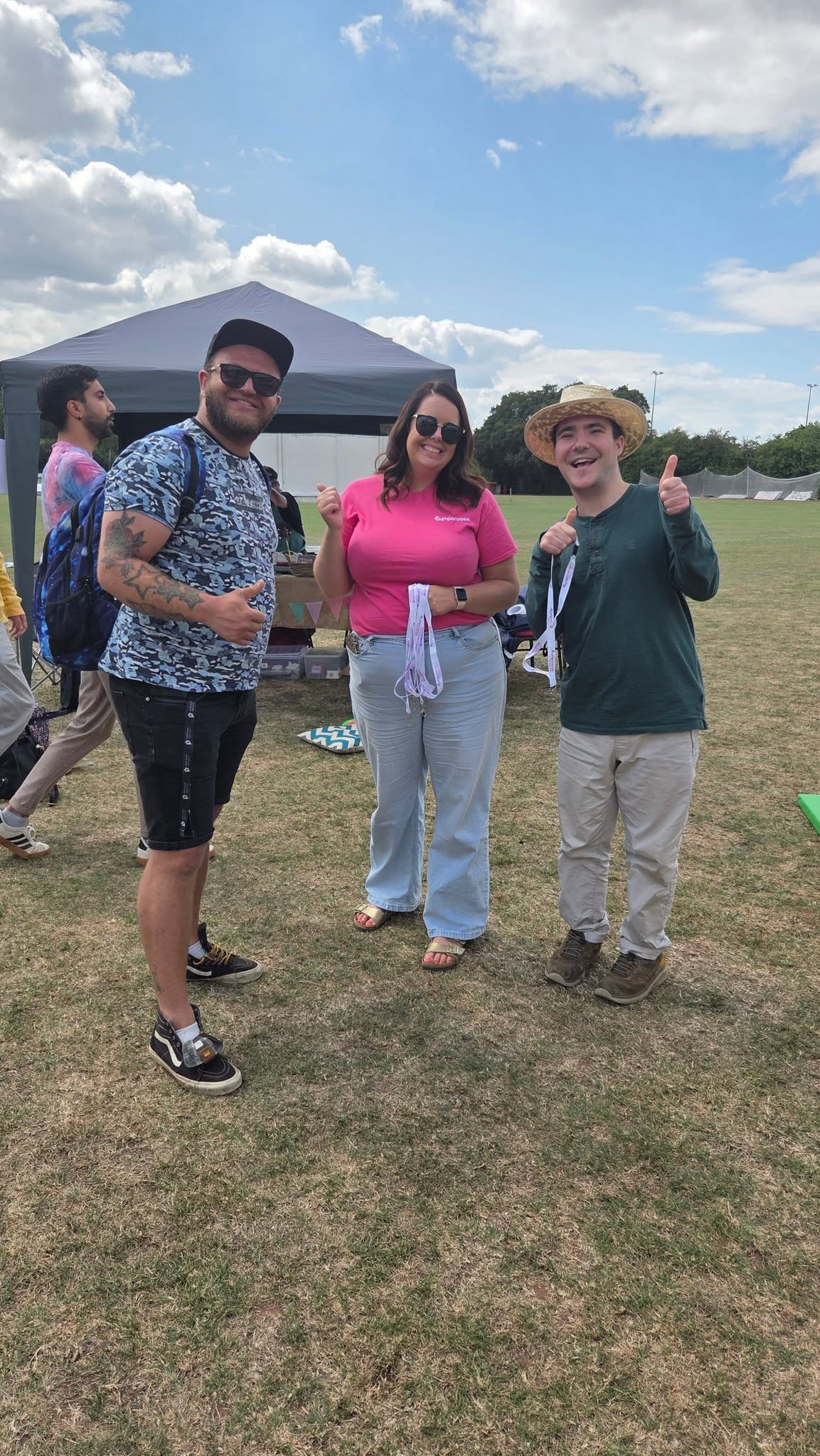

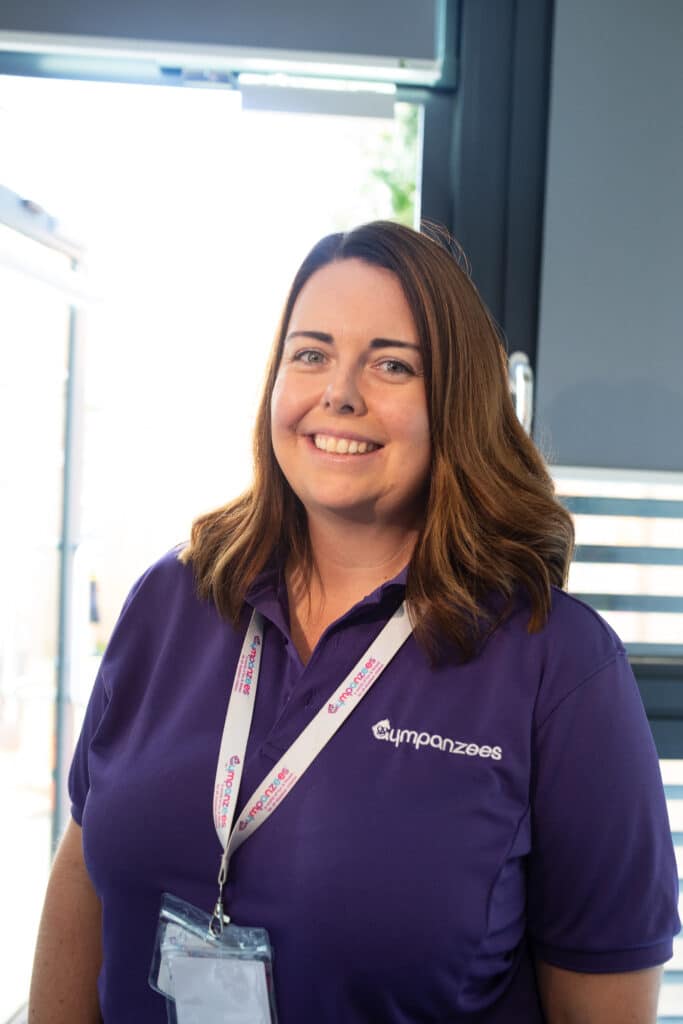
People behind the build: Emily Thorn, Gympanzees Centre Manager
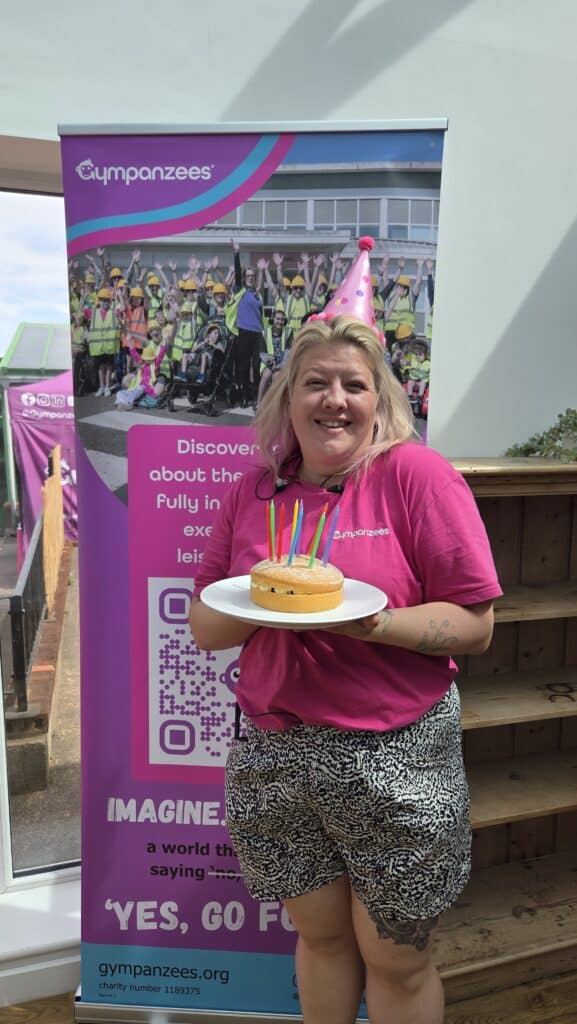
Emily Thorn is Gympanzees first ever Centre Manager, and she’s working out how our Bristol based permanent centre will run day to day before a single family walks through the door.
Having worked across six Gympanzees Pop Ups, Emily has seen first hand how families use our spaces, what works well and where things could work better. Now she’s using that experience to help shape everything from individual rooms and equipment to the café, toilets, partnerships and the practical details that will make the centre work every day.
We asked Emily about the thinking behind the build, the decisions families have helped shape and what she’s most looking forward to.
How it started
Emily first heard about Gympanzees through our COO, Fran, at a point when she was looking for something different after around 20 years in the corporate world.
“I first heard about Gympanzees through our COO, Fran, and I just thought it sounded amazing.
At the time, I’d recently taken redundancy after working in the corporate world for around 20 years. Part of the reason I’d taken redundancy was that I couldn’t see myself spending another 20 years doing the same thing. I didn’t know exactly what I wanted to do next, but I knew I wanted to do something that felt meaningful and had a real purpose.
When I heard about Gympanzees and what they were trying to create, it really struck a chord with me. This kind of place simply didn’t exist, and through friends who have disabled children, I’d seen first hand some of the challenges families faced just trying to find places where they could go and enjoy time together.
Things that many of us probably take for granted, going somewhere to play, exercise or spend time as a family, could involve so much planning or sometimes just weren’t accessible at all.
So the idea of being part of an organisation that was trying to change that felt really special. It was an opportunity to take the experience and skills I’d built up over those 20 years and use them for something that could make a genuine difference to families.”
Today, Emily’s role is about turning years of ideas, research and Pop Up learning into something that works in real life.
“At the moment, my role is really about looking at how the centre is actually going to work day to day, but also helping to shape what we’re creating and how it can be used.
I’ve had the privilege of working across six Gympanzees Pop Ups now, so I’m able to draw on all of that experience and think about what we’ve learnt from families and what that means for the permanent centre.
A big part of my role is looking at the individual spaces and the equipment that will go into them. I’m constantly thinking: is there enough for people to do? Is there too much? How will families actually use the space?
I’m also looking at how the centre could be used by therapists, schools and Alternative Learning Provisions, as well as working with councils, other charities and disability organisations. We’re really keen to partner with people rather than work in isolation”
When it started to feel real
“For a long time, the centre existed in plans, drawings and conversations.
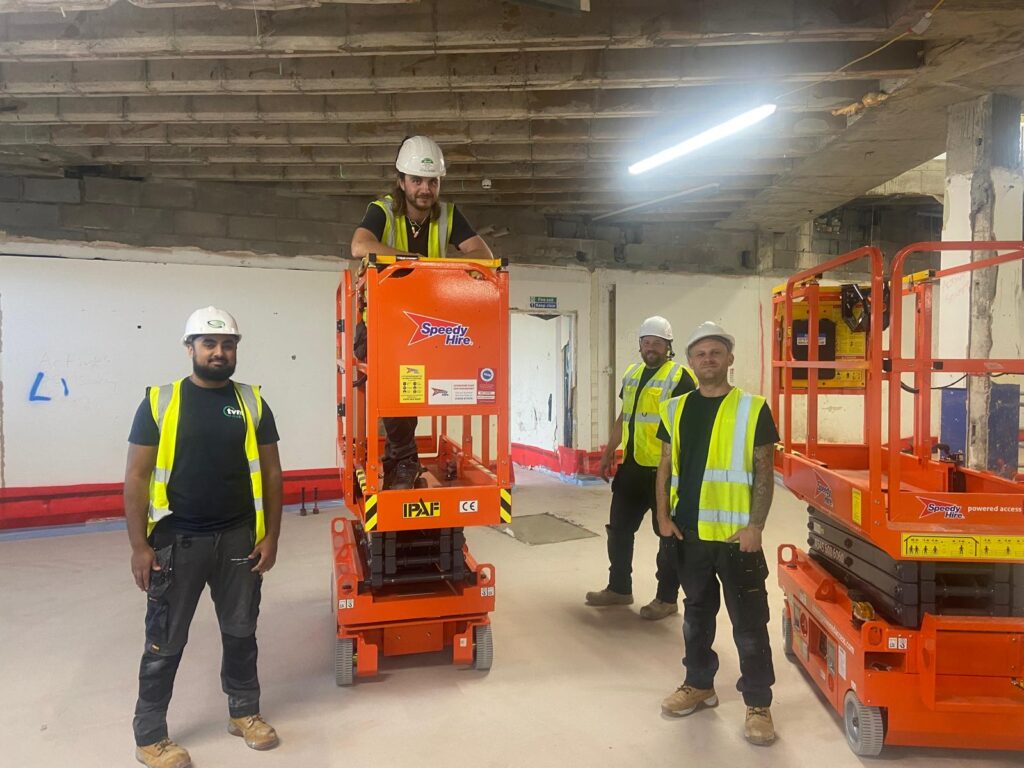
Then the walls started going up.
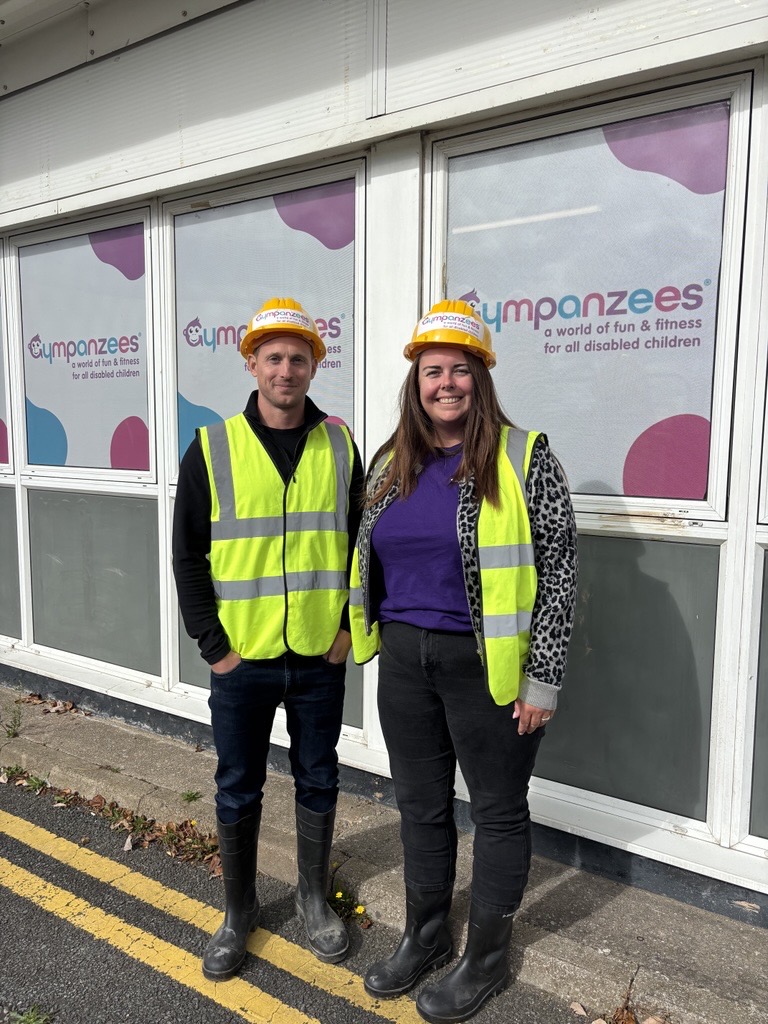
We went into the centre as a team and, by then, the walls were up and you could really see the shape of the building and start to understand how all the spaces connect.
I think when you’re constantly looking at plans and drawings on a piece of paper, you lose the sense of scale. The Dark Sensory Room is a really good example. I knew from the plans that it was going to be an amazing space, but in my head I’d imagined it being much smaller.
Then I actually stood in that room and just thought, ‘Wow, this is going to be incredible.’
That was probably the moment when it changed for me from drawings, plans and lots of conversations into thinking, ‘This is actually happening.’ “
The thinking behind the details
One of the biggest themes running through Emily’s work is how much thought can sit behind something that looks simple.
The café is a perfect example.
“The café is a really good example of how lots of seemingly small decisions come together to make a space genuinely accessible.
Even the location of the café within the centre has been intentional. Through the Pop Ups, we’ve learnt that for some children food can become such a focus that once they see the café, it can be difficult to move on to anything else.
So in the permanent centre, the café sits outside the main play spaces. Families can choose when, or whether, they want to use it, and there are even doors that can help take it out of sight if needed.
We’re also thinking about accessibility from an employment perspective. We want to recruit disabled people to work within the centre, so the kitchen layout needs to work for our staff too. And we want people working in the café to gain real, transferable skills that could potentially help them move into employment elsewhere in the future.”
Some of the most thoughtful details are the ones families might never consciously notice.
“There are so many details that I hope people won’t necessarily notice, because if we’ve got them right, they should just make the centre easier and more comfortable to use.
We’ve even removed hand dryers from the toilets because we know the sudden noise can be overwhelming or startling for some people.
It’s such a small detail, and many people may never even realise we’ve done it, but for somebody else it could make the difference between feeling comfortable using that space or not.”
Designed with families
So much of the centre has come directly from listening to disabled children, young people and their families.
One of Emily’s favourite examples is the soft play.
“We always knew we wanted children who use hoists to be able to get up to the first floor of the soft play and access the slide alongside their friends and siblings.
We worked with our hoist provider and soft play company to design a solution, and we were really excited about what we’d created.
Then we shared the plans with members of our Service Delivery Committee. They loved that we’d found a way to get children upstairs and onto the slide, but they challenged us with a really simple question: ‘What else can they do once they’re up there?’
And they were absolutely right.
We’d been so focused on overcoming that first barrier and getting a child upstairs that we hadn’t fully considered whether they would then be able to experience the rest of the play available on that level.
We didn’t want inclusion to mean being able to access just one thing while friends and siblings could access everything else.
So we went back to the drawing board with our suppliers. We’re now creating an incredible soft play space with hoisting on both the ground and first floors, opening up so much more of the play experience.
That challenge from families genuinely changed the design for the better. Sometimes you need somebody to ask the question you haven’t thought to ask.”
What accessibility should feel like
For Emily, accessibility is about much more than meeting standards.
“Ultimately, I think we’ll have got accessibility right when families don’t necessarily have to think about it.
They can just come in, feel that they belong, relax and enjoy being together.
That idea of choice runs throughout the centre. Different equipment, different ways to use spaces and different options depending on what works best for each family.”
What comes next
There are plenty of spaces Emily is excited to see families use for the first time.
“I think the outdoor playground is going to be epic. We really wanted to flip the narrative of what an accessible playground looks like.
Quite often you’ll see a playground with one or two pieces of accessible equipment, whereas we wanted to turn that idea on its head.
I want children to arrive and have that almost Willy Wonka feeling of, ‘What do I go on first?’ There will be so many different things to choose from and different ways for children to play alongside their friends and siblings.
But I’m also incredibly excited about our Celebration Room for a completely different reason. We’ve heard from families who have never been able to have a party for their child, or who haven’t been able to invite everyone they wanted because the venue couldn’t cater for different disabilities.”
Ultimately, it is the feeling of the whole centre that Emily keeps coming back to.
“I hope there’s a feeling families get when they walk through the doors, that parents’ shoulders can just drop a little.
Ultimately, I hope it feels incredibly welcoming, almost like a home from home, and somewhere families know they belong.”
The moment it all becomes real
Opening day will undoubtedly be emotional, but Emily thinks the biggest moment might come a little later.
“I think seeing families coming through the doors for the first time is going to be incredibly emotional, particularly those families who have been with Gympanzees through our Pop Ups.
But actually, I’m not sure the biggest emotional moment will be on the first day. I think on opening day my head will probably feel like it’s going to pop off because there’ll be so much going on!
I think it might come a little later, once we’ve settled into it. When there are children in all the rooms, families are enjoying the spaces and suddenly you realise: this is happening every day now.
I think that’s when it will really hit me. This isn’t a Pop Up that we have to pack away. It’s here, and families can keep coming back.”
Be part of what comes next
Emily and the wider Gympanzees team are making decisions like these every day, shaped by everything we have learnt from disabled children, young people and their families.
Now we need your help to turn those plans into a centre families can keep coming back to.
Our final major public Crowdfunder before we open the doors in Spring 2027 is live now.
Support Go Bananas for Gympanzees before November 3rd: Support Go Bananas for Gympanzees